Changemaker Spotlight: Bird Safe Campuses
by Kristin Dunn
Our latest Changemaker Spotlight highlights two innovators advancing bird conservation in a high-impact area: universities. We were introduced to Isabelle Pardew and Emily Schaal by bird-friendly glass expert Heidi Trudell. As co-creators of the Bird Safe Campuses platform, Isabelle and Emily have built a resource-rich experience, designed to inspire the implementation of bird-safe window solutions on college campuses.
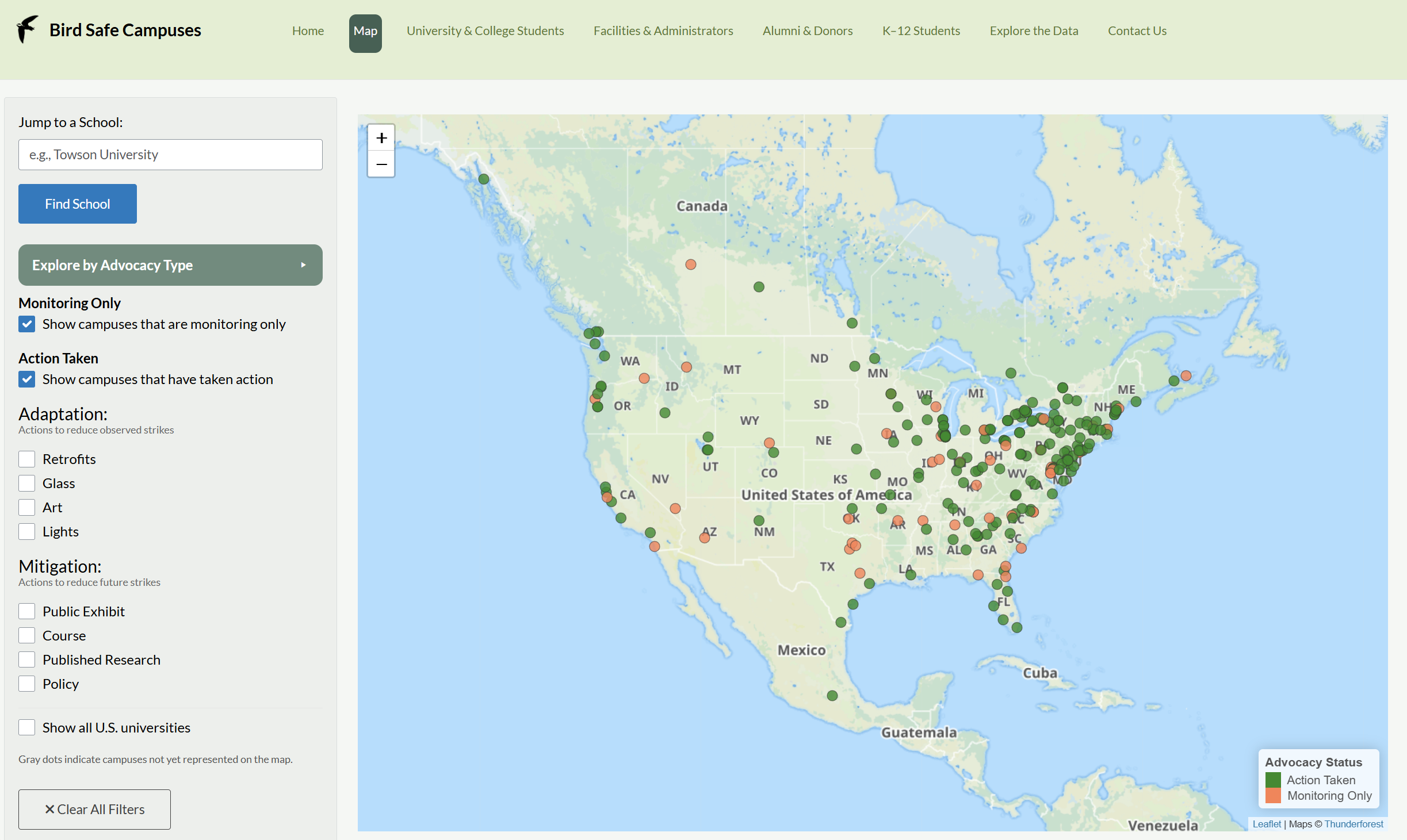
Screenshot of the Bird Safe Campuses platform
Drawing on backgrounds in engineering, mathematics, design, and conservation, Isabelle and Emily are addressing a critical issue: bird-window collisions, which kill more than one billion birds each year and are largely preventable. Their project engages others through a robust set of resources, including an interactive map featuring hundreds of bird-safe university projects across the country.
We are thrilled to spotlight their proactive, community-oriented approach – a brilliant, real-world example of the kind of awareness and response encouraged in Laudato Si’. In the landmark encyclical, Pope Francis called for creative, intentional action to protect biodiversity and habitats. He warned that human development can “crowd out natural habitats and, at times, break them up in such a way that animal populations can no longer migrate or roam freely,” and lamented that while “alternatives exist which at least lessen the impact of these projects…few countries demonstrate such concern and foresight.”
Through Bird Safe Campuses, Isabelle and Emily are helping universities demonstrate the concern, foresight, and action that birds need.
Discovering the Issue
Isabelle and Emily’s paths crossed in early 2025, after each had independently begun working on bird-safe glass initiatives.
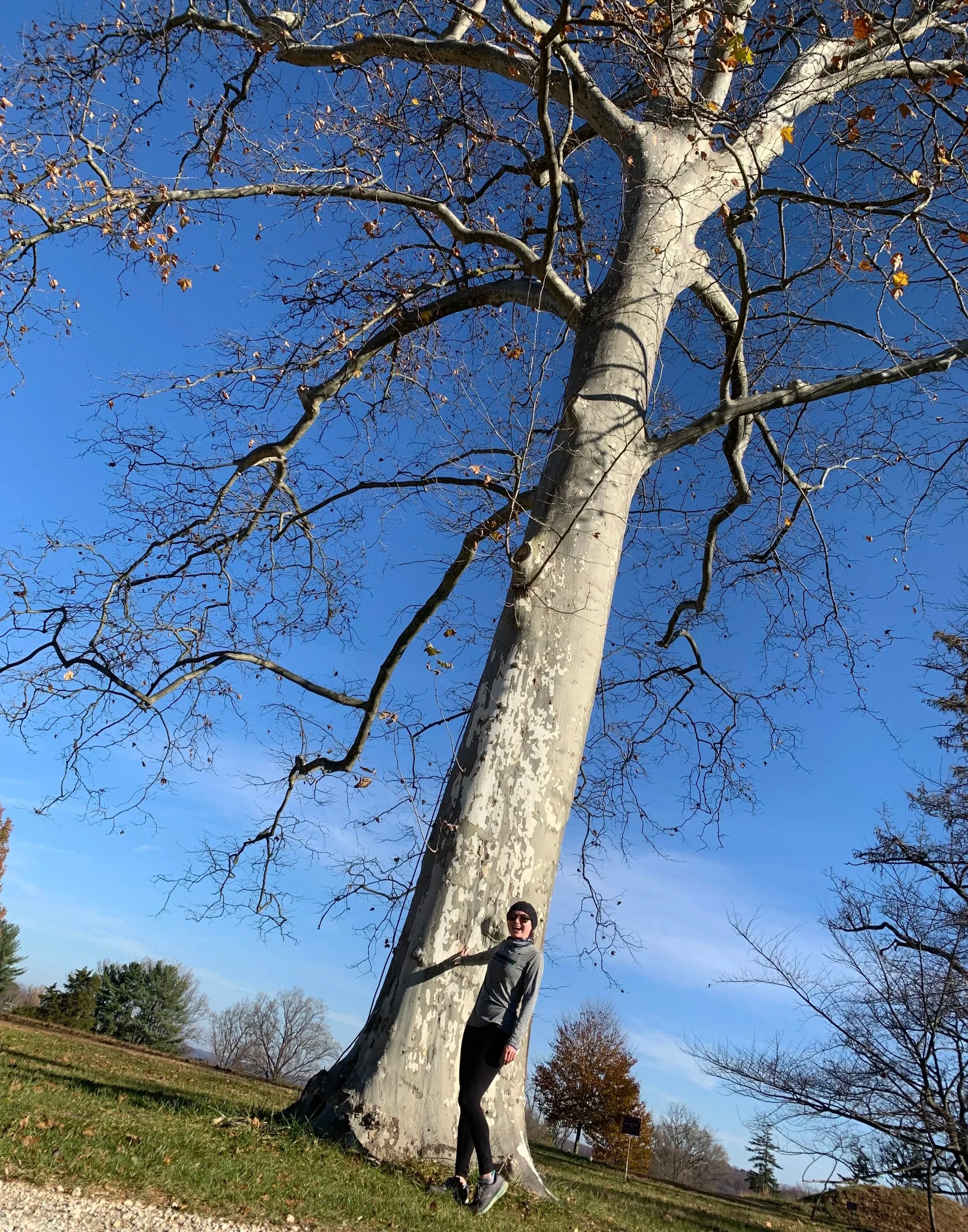
Isabelle Pardew
For Isabelle, her passion was sparked a decade earlier when she read about the Minnesota Vikings’ plans for a new $1.1 billion stadium. According to the National Audubon Society, local advocates warned that the stadium could become an “avian abattoir” due to its highly reflective glass and its location along the Mississippi Flyway, a major migratory route. In response, advocates pushed for bird-friendly design changes.
The story piqued Isabelle’s interest and led her to dig deeper. “Never before had I even contemplated that the buildings and architectural indicators that we as humans take for granted are killing off our wildlife, and that wildlife being some of our planet’s most crucial species. Ever since then, I have been invested in advancing solutions across campuses, staying apprised of new research developments, and finding an informed, passionate network of individuals and organizations who are doing incredible work in this field.”
In 2018, Isabelle founded Lights Out Towson University (now Bird Safe Towson University). Seeking a broader impact, she began documenting similar efforts nationwide. “After several years of this work, I wondered whether there were other campus groups out there doing similar work. This led to many hours of research and the creation of a map documenting campus bird-window collision efforts, ultimately serving as the basis for the Bird Safe Campuses platform! I formally studied Applied & Industrial Mathematics and Communication in my undergraduate and graduate career, but realized that all the while, my underlying passion throughout all of these activities was the environment - and more specifically birds!”
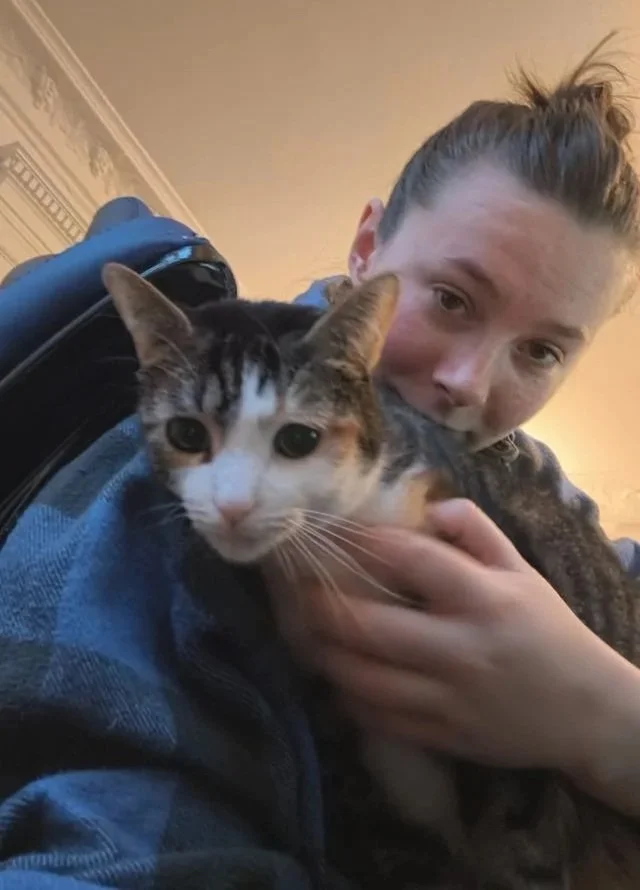
Emily Schaal with her cat, Pesto
Elsewhere in the country, Emily had learned about bird-safe glass through a college friend who was passionate about birding. The issue resonated with her on multiple levels. “[It] is as much a humanitarian and social effort as it is ecological and technical. From my friends who love birds, to everyone distressed by the ‘thud’ against the window they are next to, bird strikes have a really destructive impact on human beings as well as, obviously, the birds themselves,” Emily said.
“Working to prevent bird strikes is a way I care for my friends and community,” Emily added. “While bird-building collisions are a very ‘concrete’ issue, it’s one which encapsulates a lot about the way we as human beings see the world around us. There’s this blind spot we have where we don’t really consider areas of human settlement as being part of nature.”
After finishing her Ph.D., Emily committed more of her time to passion projects, which led her to connect with Isabelle. “One of my college friends put me in touch with advocate powerhouse Heidi Trudell, who from there put me in touch with Isabelle, as well as many other members of the community,” Emily said.
Developing the Platform
With that fortuitous connection made, Emily and Isabelle got to work, building on the initial data set and map that Isabelle had created.
“Together we collected a host of new data from a combination of community outreach and web scraping,” Emily said. “We have recorded efforts at over 230 schools, and are slated to publish an additional 20 in an upcoming update.”
At the heart of the platform is the interactive map - an invaluable resource for universities seeking inspiration and guidance. It highlights institutions monitoring collisions as well as those actively working to reduce or prevent them.
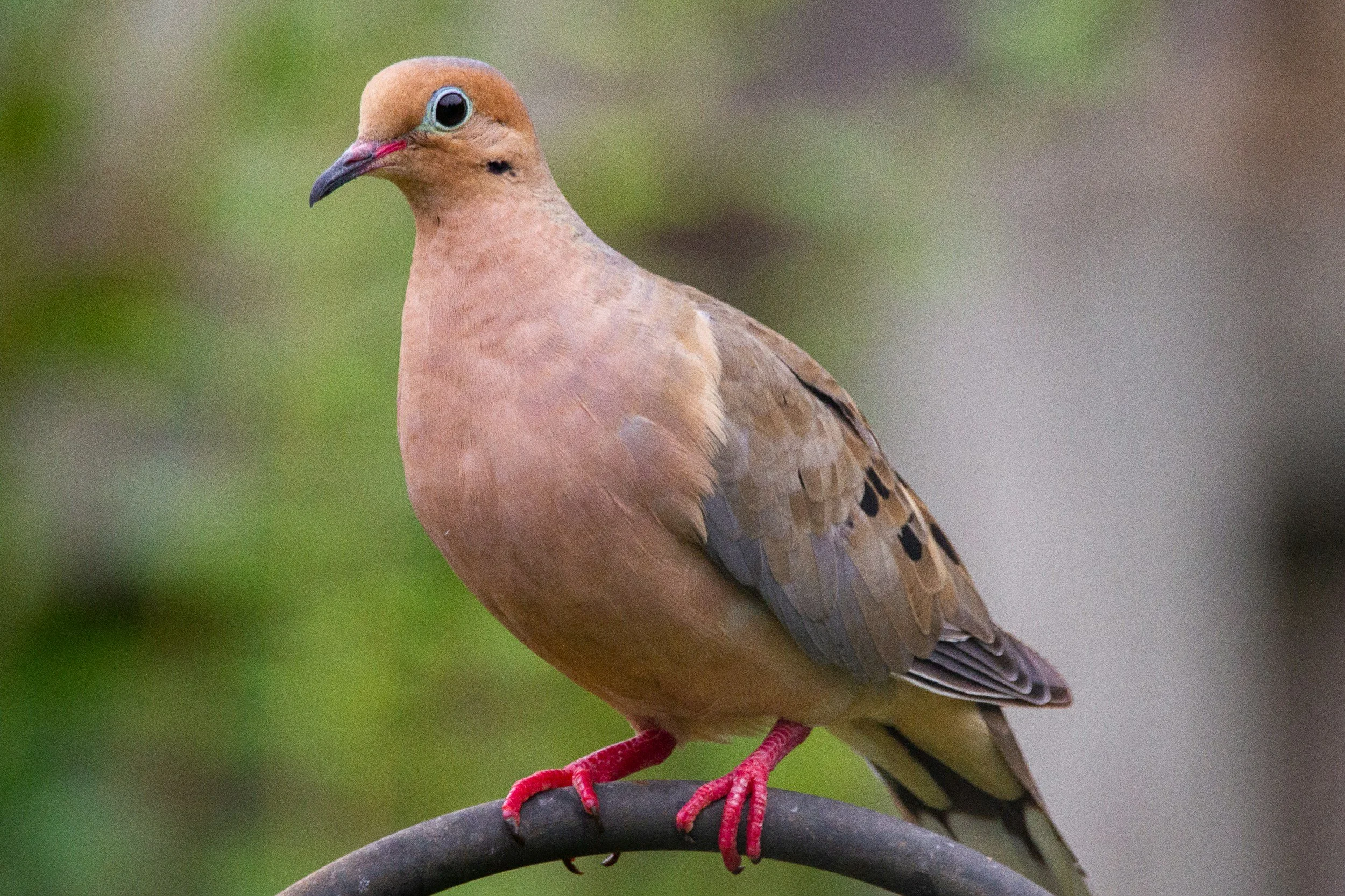
“Monitoring reflects a critical early stage where students, faculty, staff, or other dedicated individuals collect data on collisions,” Isabelle explained. “This work takes effort to get going, especially for students, and while it may not produce immediate visible change, identifying the problem and saving even a few injured birds creates something real to build on for future work.” Isabelle said.
She continued, “The second category includes adaptation, or responding to collisions in the highest strike zones, and mitigation, which focuses on reducing strikes across campus as a whole.”
Beyond the data, the platform includes actionable ideas and resources for university students, faculty, staff, alumni, and other community members.
“Campuses are complex landscapes to navigate, especially for students balancing classes, work, and extracurriculars, so Emily and I designed the Bird Safe Campuses platform as an accessible starting point where anyone can learn how to begin and then build creatively or follow proven models,” Isabelle said.
A Wide Variety of Projects
Isabelle and Emily report that learning about the variety of projects has been inspiring. Emily noted, “The amount of passion behind every one is truly remarkable, and I feel very lucky to be able to learn about them and support them as best I can.”
The map offers a wealth of inspiration, including innovative projects at Central College in Pella, Iowa. Led by two professors in the biology and art departments, the college strategically installed student-designed mural sticker decals across specific windows. According to an article from the school, faculty and students collaborated to install the CollidEscape decals on windows known to cause “significant bird deaths every year.”
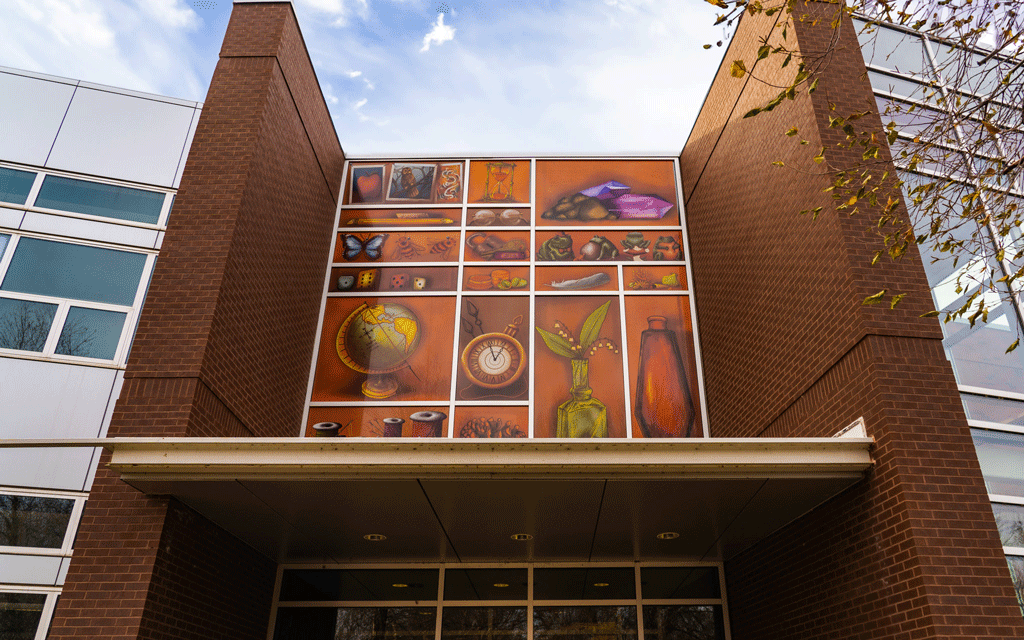
Student-designed CollidEscape mural decals protect birds at Central College in Pella, Iowa. Photo credit: Central College.
Among the more than 230 projects included on the map are recent campus-wide decal design projects hosted by Princeton University (2025) and Cornell University(2026).
Isabelle shared, “This kind of initiative stands out because it brings together multiple disciplines, introduces those outside the sciences to the issue of bird-window collisions, and gets students excited about their role in creating an effective solution!”
Other projects feature hand-drawn art. For example, a project at Florida Gulf Coast University in Fort Myers, Florida blended art and conservation, featuring student artists’ hand-drawn designs, applied to windows in bird-visible patterns. The windows depict native birds, including herons, the anhinga, and the spotted sandpiper, creating both an aesthetic and functional solution. Faculty, staff, students, and two local Audubon chapters collaborated on the project, which used affordable, weather-resistant paints.
While there are many different efforts featured, Emily emphasized that each one is meaningful and has the potential to save birds’ lives. “In collision prevention…the most important work is usually not very flashy or noticeable. Bird safe building activities operate on a building-by-building basis – they are fundamentally local,” Emily said.
Why Universities?
Universities are uniquely-positioned to lead on bird-friendly window initiatives, saving birds while engaging students in hands-on, interdisciplinary projects.
Emily, who has professionally analyzed energy data for various building types, noted that universities have a structural advantage: “A university campus is composed of a lot of buildings, all managed under a central authority. Additionally, universities are often home to students, professors, and administrators who are invested in improving their communities. These factors make it slightly easier to successfully advocate for bird-safe buildings at universities than other places.”
Isabelle pointed to the fact that many are “focal points for local community support,” drawing in local nonprofits, alumni, and community members invested in stewarding and improving the campus - something she experienced first-hand at Towson University. She also noted that they “are excellent grounds for experimenting with new ideas, supported by faculty mentorship and collaboration with other students.”
Both point out that these projects are applicable elsewhere. “We hope that these successes can spread beyond the universities as well,” Emily said.
A Vision for the Future
Looking ahead, both Isabelle and Emily want to see bird-safe design normalized in policy and practice.
Isabelle says, “At the campus level, I hope to see greater recognition of student environmental initiatives that currently exist in niche areas. While bird-window collisions are one example, issues such as light pollution or rodenticide use also deserve attention, yet sustainability efforts often focus on a narrow set of familiar activities like tree plantings or cleanups. Expanding that scope would help students better understand their relationship with the natural world.”
She also points to recent legislative wins like Maryland’s Sustainable Buildings Act of 2023, which adopts bird-friendly standards. “More broadly, I hope to see growing recognition that human needs are inseparable from the needs of the natural world, leading to policies that extend beyond emissions reduction to address long-term ecological impacts.”
Emily shared, “I would really love to see more development of resources dedicated toward overcoming the economic barriers preventing more buildings from being made bird safe. In addition to material costs, a vast amount of work on bird safe buildings is volunteer. I think it really says a lot that so many people are so passionate about this issue that they are willing to give so much of their time to it. However, it also means that progress is driven primarily in communities with a lot of people who can afford to volunteer. In taking a humanistic approach to advocacy, I think it’s absolutely necessary that we think about how we can bring bird safe buildings within reach of more communities.”
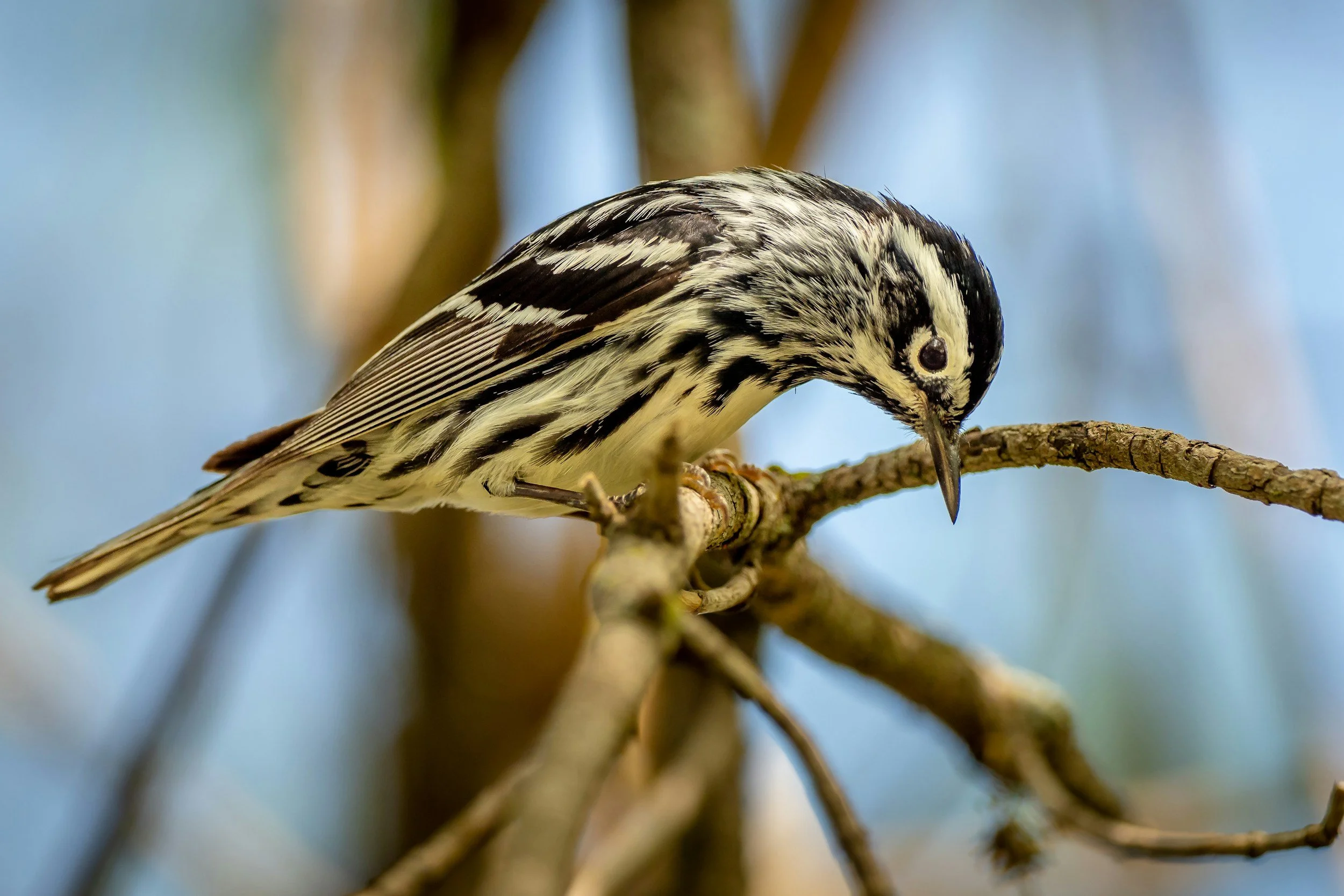
Lessons for Others Effecting Change for Birds
To those looking to make a difference, Isabelle and Emily offer three pillars of advice:
Work together with others: “I think something I always find useful to keep in mind is that bird-friendly glass projects usually involve a wide array of skills, and implementing a project can take several people who are good at different things. Having someone who is good at sending emails and keeping things organized can be just as important as having someone who can evaluate which solutions are best for which buildings,” Emily said.
Stay the course: “It is so important to remember that any work you do matters, even when results take time! Advocacy, even without immediate outcomes, lays the groundwork for future change. Lasting progress also depends on building a network of committed students and supporters so the work continues beyond any one person’s time on campus,” Isabelle advised.
Practice gratitude: Emily concluded, “Something else that I think is extremely important is to practice telling people how much you appreciate the work they do. The rewards of a successful bird-friendly project can take years to realize. In the meantime, being generous with appreciation for others’ work that might otherwise get lost or unnoticed can really help the people around you see that what they are doing is important.”
Take Action
Visit Bird Safe Campuses to see if your alma mater or a university in your state is on the map. If not, use the platform’s resources to start a conversation today.
If you help manage a building in your parish or faith community, use the map to look for inspiration and resources to start a project of your own. You can take a single step forward and grow from there! As the Bird Safe Campuses platform notes, start by identifying a high-risk collision site and treating that specific window. Your action can save birds’ lives.