
A Plant-Based Harvest: Inspiration from Seton Hall University
by Kristin Dunn

Pope Francis once referred to universities as “driving forces of ideas and sources of new inspiration for human life and thought.” As hotbeds of creativity, experimentation, and possibility, universities can be powerful catalysts in caring for God’s creation.
One professor putting that vision into practice is Dr. Judith C. Stark, professor emeritus at Seton Hall University (SHU), a Catholic university in South Orange, New Jersey. As a professor of philosophy and the environment, Dr. Stark has spent decades helping students understand the causes and global effects of climate change - and how everyone can be part of the solution.
Hosting the First University-Wide Plant-Based Luncheon
In 2024, Dr. Stark and her colleague Linda Karten, SHU’s senior marketing and communications director, spearheaded an exciting “Fall Harvest Luncheon” in honor of Saint Francis’s feast day. Working with the university’s Gourmet Dining Services, they crafted a menu to introduce students, staff, and faculty to plant-based dishes they may not have otherwise considered trying.
Guests enjoyed a plant-based “chicken” parmesan made entirely of vegetables, a vegan pumpkin soup, garlic broccoli rabe, and a baked potato bar with vegan chorizo and a dairy-free cheddar cheese.
The luncheon included inspiring and practical presentations. Seton Hall Executive Chef Clarence Johnson shared tips for preparing easy plant-based meals, while Dr. Stark spoke about the ecological benefits of plant-based eating and her experience as a vegetarian for more than 50 years. The event also highlighted ways to reduce food waste and provided biodegradable containers for guests to take leftovers home.
And it was a huge success. Over 100 people attended, including Seton Hall students, staff, faculty and administrators. The response was tremendously positive. It also inspired Dr. Stark and Ms. Karten to organize another event - this one in honor of Earth Day on April 22, 2025.
For Earth Day 2025, Seton Hall hosted a second university-wide celebration. The day started with a special "Mass on the Grass" where celebrants Father Colin Kay and Father John Francis reflected on Pope Francis’s teachings in Laudato Si’ and his legacy of concern for Creation. Afterwards, guests enjoyed a plant-based spread featuring tofu shish kabobs, veggie burgers and couscous, all thoughtfully prepared by the university’s Gourmet Dining Services.
Introducing Generations of Students to Environmental Action
For Dr. Stark, these uplifting gatherings are just one way of bringing care for Creation into everyday life. A professor at SHU for more than 40 years, she has decades of research and teaching experience in climate change and ethics. And she has been raising awareness about environmental issues since the mid-1980s.
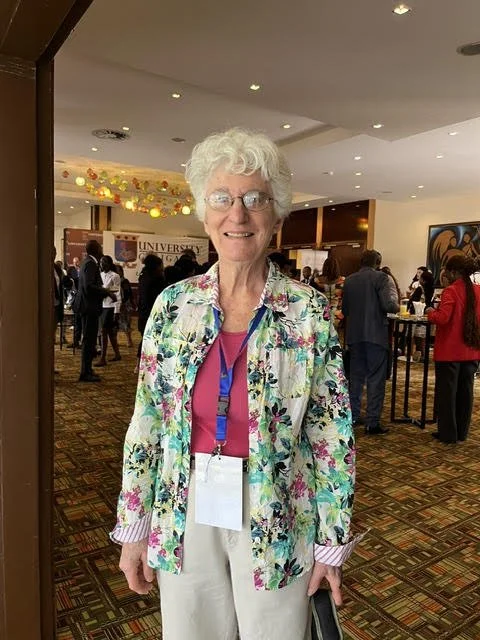
Dr. Stark at a green and sustainable development conference at the University of Kigali in Rwanda in 2024.
In her advanced course, Environmental Philosophy, Pope Francis’s Laudate Deum is required reading. In the 2023 follow-up to Laudato Si’, Pope Francis expressed concern about the world’s slow response to the climate crisis: “...With the passage of time, I have realized that our responses have not been adequate, while the world in which we live is collapsing and may be nearing the breaking point” (Laudate Deum, 2,).
Dr. Stark then helps students to live Laudato Si’ in their own lives. For example, as part of the course, students choose a project spanning three weeks: go meatless, record their daily use of plastic, or learn about their community’s water infrastructure, down to the reservoirs from which their water is drawn.
Beyond her courses, Dr. Stark is making environmental learnings accessible to her fellow faculty and staff. In addition to her work at Seton Hall, she also conducts community workshops on climate change and provides suggestions about turning “climate anxiety” into meaningful action. And, in 2023, with her guidance, the university launched its first Committee for Environmental Sustainability. The committee is working to align Seton Hall’s practices more closely with the messages of Laudato Si’ and Laudate Deum.
The Importance of Hope
Dr. Stark’s work shows how one person’s knowledge and commitment can lead to change. And after decades of teaching about environmental issues, she believes one thing is especially important: hope.
She often reminds people that every action makes a difference. That message can be particularly important for young people who have grown up surrounded by these issues. Dr. Stark encourages them to maintain hope and engage in thoughtful ecological action.
For Dr. Stark, that means continuing to educate, make thoughtful choices, and create opportunities for others to get involved. After more than 40 years at Seton Hall, she has seen how those efforts can foster climate awareness and meaningful action.