
Compassion on Campus: How One Student Took Action for Wildlife
by Kristin Dunn
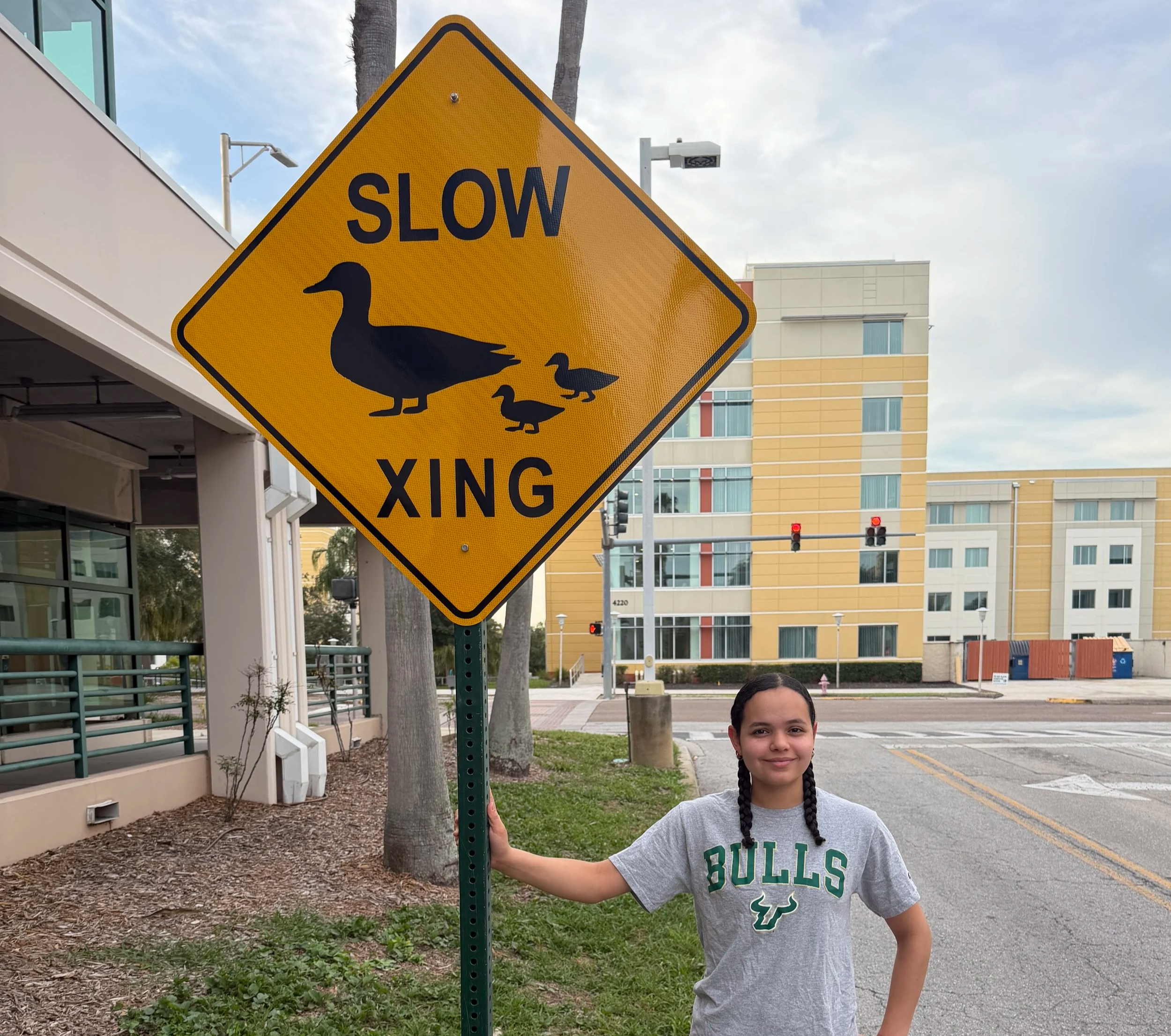
At the University of South Florida (USF), the campus’s resident birds are entering the 2026–2027 school year safer, thanks to the compassion and persistence of one student.
Senior Kaylee Ortega spearheaded a wildlife crossing project that draws awareness to the campus ducks who, like us, need to make their way around safely.
A biology major with a concentration in animal biology, Kaylee is an aspiring veterinarian with a strong interest in animal welfare, feline medicine, and wildlife protection. During her junior year at USF, she turned her passion into action to protect wildlife and encourage greater awareness and coexistence between people and animals.
The Catalyst for Action
The idea took root after Kaylee witnessed two vehicle collisions involving ducks on campus within the span of just two weeks.
“Both were struck in the same location, which is where the wildlife crossing sign is now installed,” Kaylee shared.
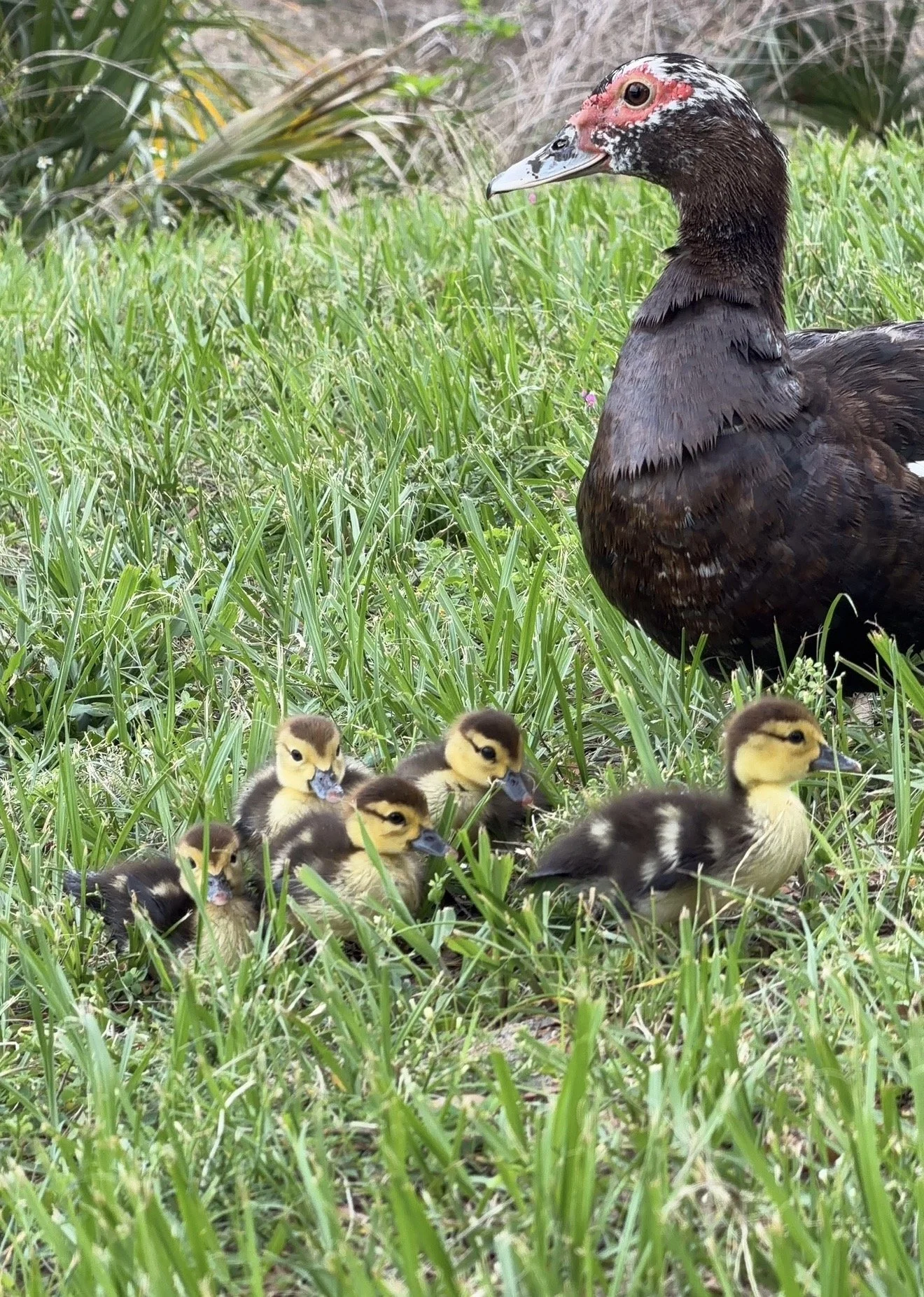
Ducks on the USF campus. Photo courtesy of Kaylee Ortega.
Leading up to this, Kaylee had been working on an observational research project to better understand where animals were being struck and which species were most at risk.
“I conducted an observational project documenting wildlife activity and vehicle-related wildlife deaths, mainly around the USF campus and Temple Terrace area. I recorded the species observed, their locations, and roadways where animals were frequently struck to identify patterns and areas where wildlife may be at greater risk,” Kaylee said.
“I found that a wide variety of species were being struck by vehicles, including ducks, egrets, hawks, turtles, armadillos, opossums, raccoons, and other small mammals. I also documented a coyote, highlighting that vehicle-related wildlife mortality can affect species of many different sizes,” Kaylee added.
Vehicle Collisions: A Major Threat to Wildlife Nationwide
Kaylee’s findings echo what wildlife rehabilitators often share: that car collisions are a major cause of wildlife injuries and death.
Across the United States, vehicle collisions are estimated to kill hundreds of millions of animals each year, while posing a serious danger to people. Approximately 1 million to 2 million collisions with large animals occur annually in the United States, primarily involving deer, resulting in more than 200 human deaths and roughly 26,000 injuries. The economic cost is substantial as well, with wildlife-vehicle collisions associated with more than $10 billion in damages each year.
The risk is particularly high in some states. For example, West Virginia carries the greatest likelihood of large-mammal vehicle collisions, with residents having a 1 in 37 chance of hitting a large animal on the road.
The solution? The Wildlife Center of Virginia shares that wildlife crossings can decrease fatalities by 80-99%, while maintaining vital habitats and connections for wild animals. A number of initiatives are underway, and more are needed. For example, the state of Florida won a federal grant to construct a wildlife crossing with two miles of fencing – to reduce collisions with the endangered Florida panther, deer, the American alligator, and other species.
Persistence Pays Off
Equipped with extensive research into the problem and its solutions, and with a target location in mind, Kaylee was ready to take action in her community. “I wanted to find a practical way to reduce the risk of collisions, so I began advocating for a wildlife crossing sign,” she said.
Today, the installed sign looks like it was always meant to be there. But the process wasn’t straightforward.
“My initial proposal was not approved, but I continued collecting observations, reaching out to different USF departments, and advocating for the project. I also worked with USF Student Government to draft a senate resolution supporting wildlife crossing signage.”
More than a year of persistence eventually paid off. USF Student Government unanimously passed the resolution supporting wildlife crossing signage, and Kaylee later received approval from USF Parking and Transportation Services.
She also created a GoFundMe to raise the funds to pay for a double-sided, reflective duck crossing sign. As the campaign explained, “simple, well-placed signage can increase awareness, encourage responsible behavior, and help prevent unnecessary injuries and deaths.”
In July 2026, the first sign was installed - at the very location where Kaylee had witnessed those two ducks struck nearly one year earlier.
An Inspiring Example for Others
Kaylee’s story is an inspiration to anyone who has seen a problem and wondered, “What can I do?” Her advice is to “start with something you care about and not get discouraged if change doesn’t happen right away.”
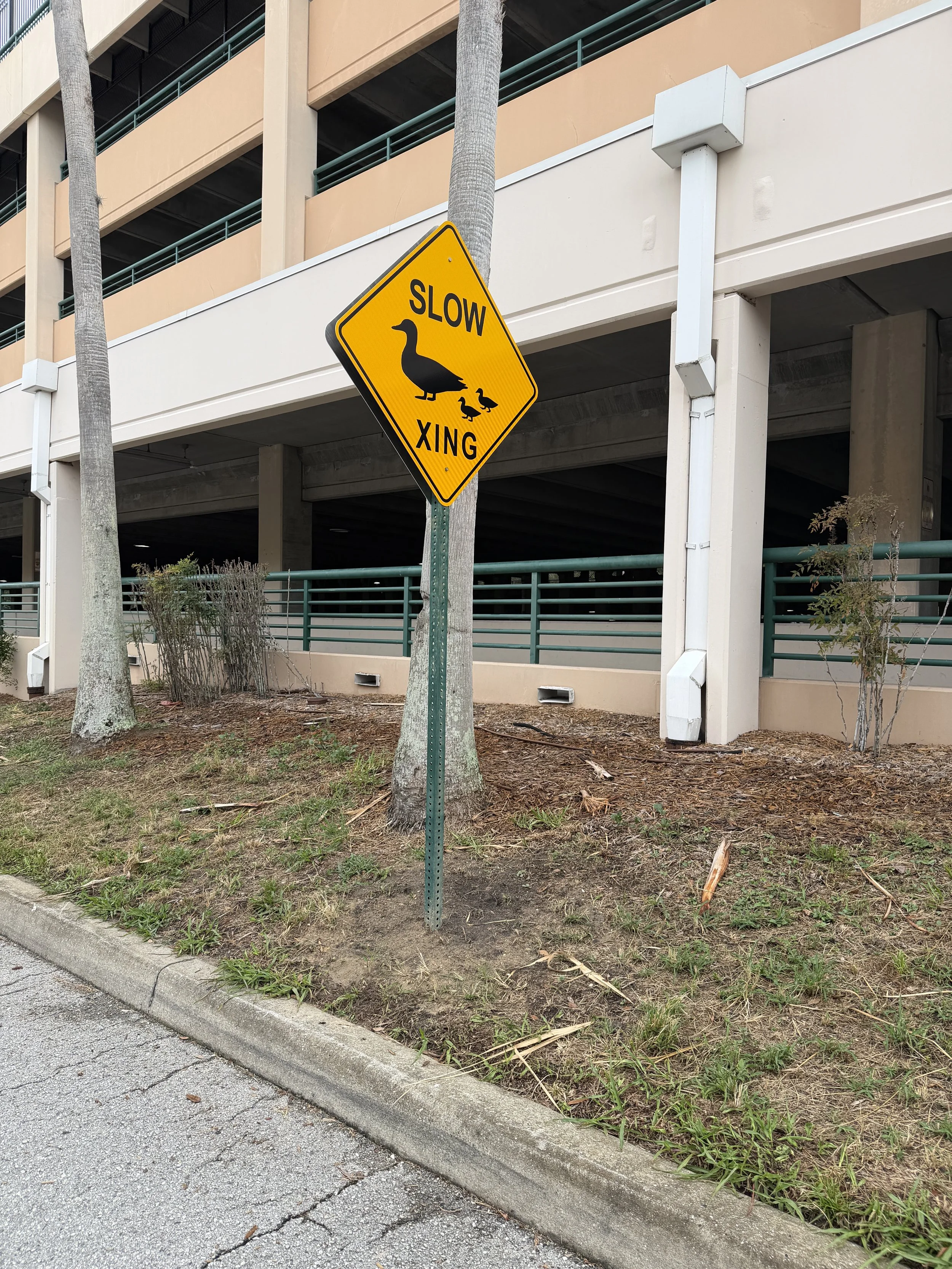
Photo courtesy of Kaylee Ortega.
“Even small actions can make a difference, especially when you take the time to learn about an issue, gather information, and advocate for a solution,” Kaylee said. “This project took time and faced challenges, but continuing to reach out, ask questions, and find people who supported the idea eventually made it possible.”
And she isn’t stopping there.
“Since the sign was installed, I’ve been happy to see people notice it and become more aware of the wildlife we share our campus with. I also created an Instagram page to highlight campus wildlife and encourage greater awareness and appreciation for the animals around us,” Kaylee said.
She also plans to continue working to make roads safer for wildlife and people. “My goal is to continue identifying high-risk areas and advocating for additional wildlife signage and protective measures across campus, with the long-term goal of expanding these efforts into surrounding areas of Hillsborough County.”
Thanks to Kaylee, the future is brighter for animals - and thousands of people who pass the sign each year will be reminded that we share this world with wildlife, too.
Take Action: Follow Kaylee’s work and other efforts to support wildlife on the USF campus at instagram.com/usfcampuswildlife!