
The Power of Naming Changes Our Hearts
by Rev. Christopher Steck, SJ
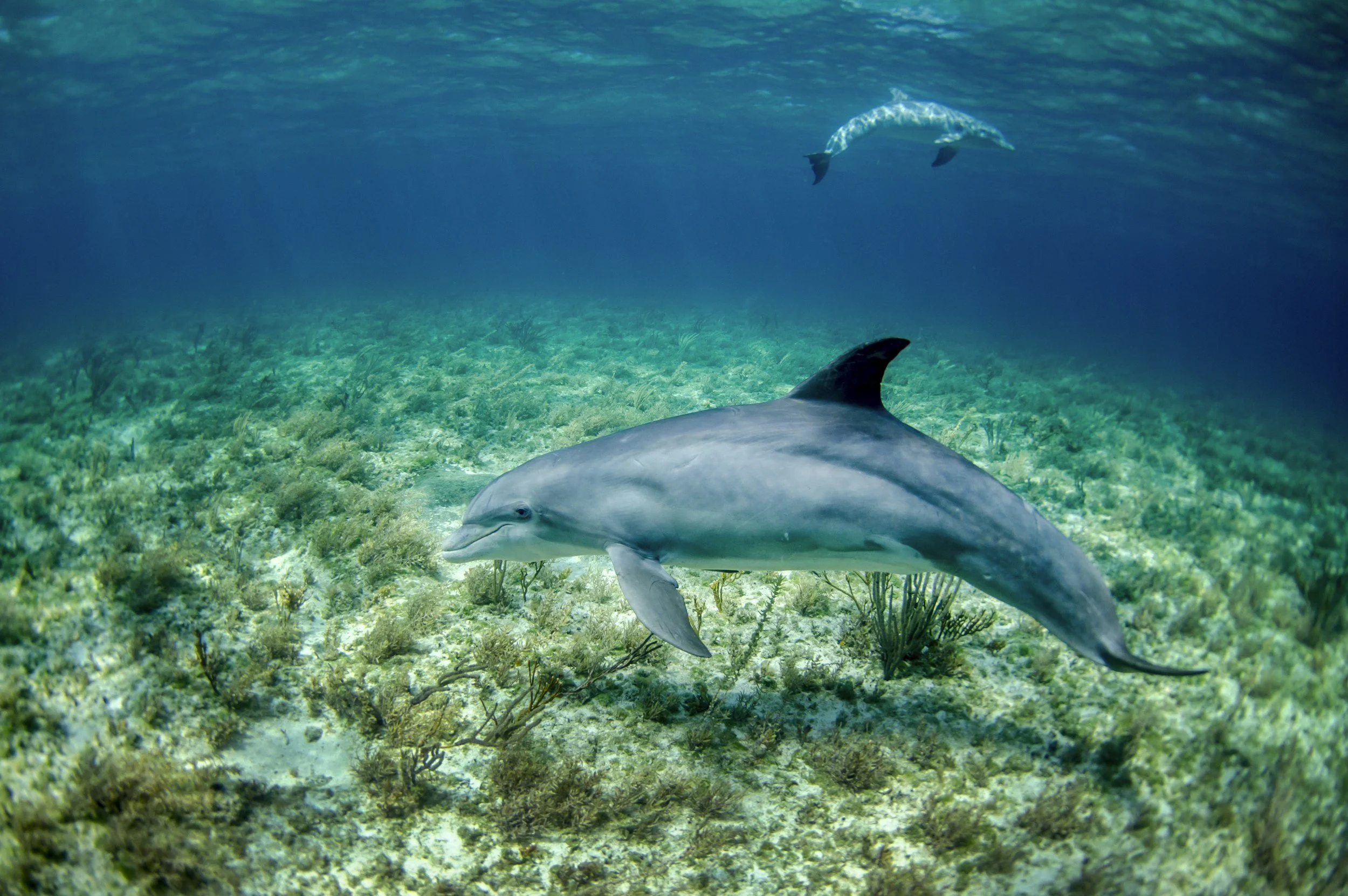
Growing up on the Texas Gulf Coast, trips to the local beach were a staple of my childhood summers. Though I rarely appreciated it at the time, those hot days taught me what it felt like to stand before the vast, restless expanse of the sea and wonder at the creatures inhabiting it—up close, the crabs and jellyfish; at a distance, dolphins, red snappers, and shrimp.
In recent decades, the Church has invited us to cherish these experiences, learn from them, and work to preserve God’s good creation for future generations. Saint John Paul II was an early champion for the natural world. He famously called the faithful to a deep “ecological conversion,” writing in his 1990 World Day of Peace message that “the ecological crisis is a moral issue.… Christians, in particular, realize that their responsibility within creation and their duty towards nature and the Creator are an essential part of their faith.”
While John Paul II and Benedict XVI laid the foundations by speaking of non-human life in broad, grand terms—creation, nature, the cosmos—Pope Francis introduced a revolutionary shift in Catholic eco-theology. In Laudato Si’, Francis moved from the abstract to the particular, focusing his attention on individual animals. He writes that “each [creature] must be cherished with love and respect,” that God has a loving plan for “every creature,” and that “even the fleeting life of the least of beings is the object of [God’s] love, and in its few seconds of existence, God enfolds it with his affection.”
This was a profoundly new way for the Church to speak. And it carries a challenging implication for us: It is not enough to care for "nature" in the aggregate; we are called to attend to the specific struggles and cries of individual creatures.
Psychologically, this aligns with how human hearts are wired. We struggle to connect with massive abstractions, but our empathy ignites when we encounter the individual. Social science has recently documented this phenomenon: We are far more likely to donate to a campaign centered on the plight of a single person living with ALS than to a general fund for the disease itself. The individual is the doorway through which our compassion enters.
Does this same psychological truth apply to our relationship with wild animals? It turns out it does. Consider the research of Dr. Janet Mann, a professor at Georgetown University with joint appointments in Biology and Psychology. Dr. Mann has devoted her career to studying bottlenose dolphins—observing them in the Potomac River and the Chesapeake Bay during the academic year, and spending three months each summer researching them in Shark Bay, Australia.
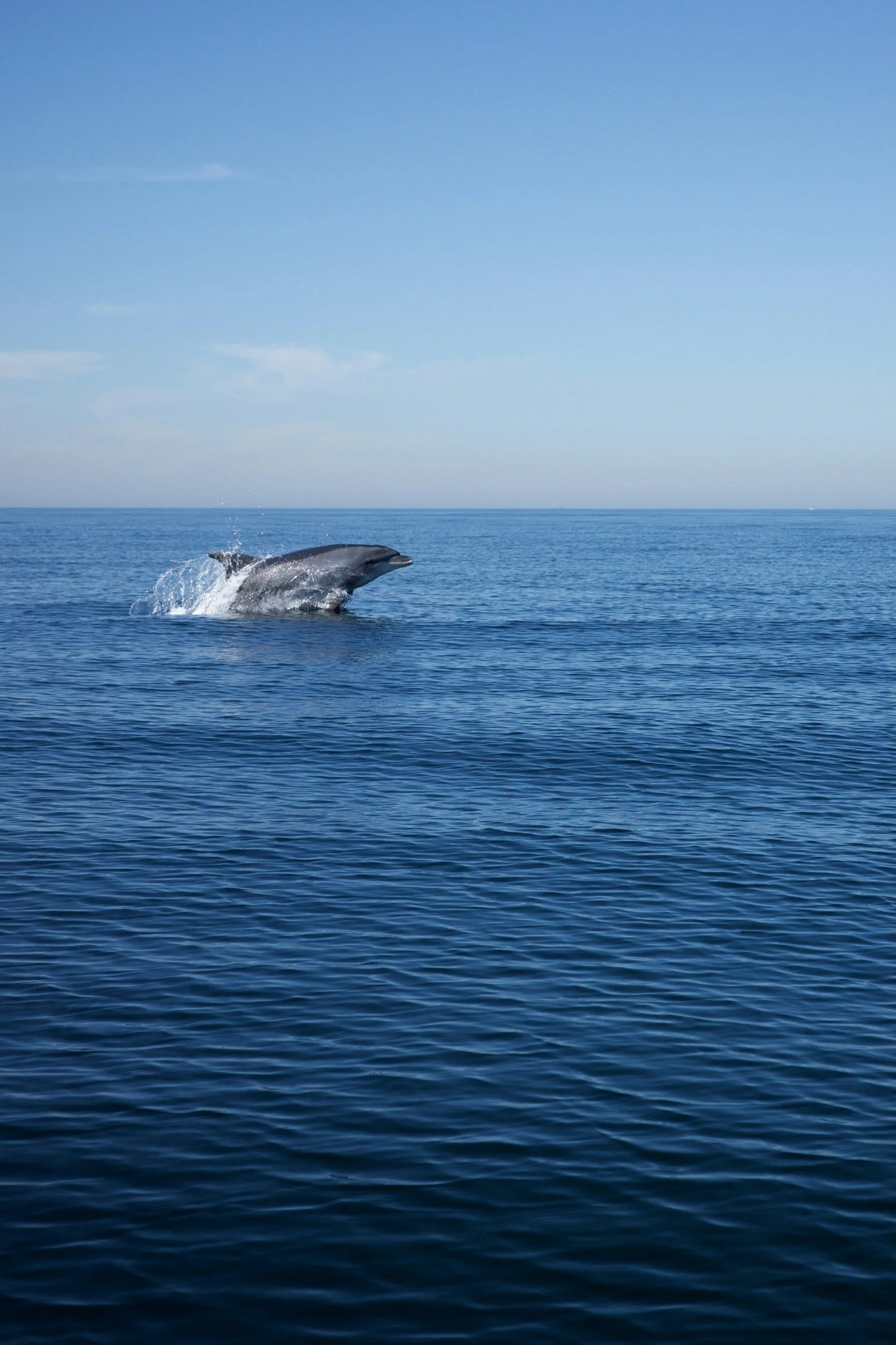
Every dolphin possesses a unique dorsal fin—a natural identifier as distinct as a human fingerprint. Over decades of observation, Dr. Mann and her research team have come to know these dolphins individually and given names to many of them. In a study that Mann co-authored with Pauline Smith and Abigail Marsh (“Empathy for Wildlife: The Importance of the Individual”), they showed non-experts twenty distinct photos of dolphin dorsal fins and told them they would be asked about these specific animals later. The results were striking: Participants who were taught to recognize and differentiate individual dolphins showed a significantly higher level of empathy and care toward animals in general compared to the baseline control group. Recognizing the individual expanded their capacity to care for the whole.
What might this mean for our daily lives? The next time you repeatedly encounter a specific wild animal in your neighborhood—a particular blue jay at your feeder, a squirrel in your yard, or a seagull on your morning walk—consider giving it a name. It might feel a bit playful or eccentric, but the science suggests it serves a deeper spiritual purpose. Naming an animal pulls it out of the background noise of "nature" and transforms it into a neighbor. It awakens our empathy.
In a homily last summer, Pope Leo spoke of a similar spiritual discipline, urging us to cultivate a “contemplative gaze” before creation. “Only a contemplative gaze,” he noted, “can change our relationship with created things and lead us out of the ecological crisis caused by the rupture of relationships—with God, with our neighbor, and with the earth.”
Care for our common home must become more than global statistics and abstract environmental policy. It needs us to slow down, look closely at the creature right in front of us, and recognize a subject of divine affection looking back.
Rev. Christopher Steck, SJ was born in Pt. Arthur, TX. After working as a circuit designer for Texas Instruments in Houston, he entered the Jesuits in 1983. He was ordained in 1994, and then began Ph.D. studies at Yale University in Christian Ethics. Upon completion of the degree in 1999, he began work in the Theology Department at Georgetown University. He recently published A Heaven for Animals: A Catholic Case and Why It Matters (2025). His courses include “Problem of God” and “Dogs and Theology.”