Learn / Church Teachings / Contemporary Church Teachings
From Vatican II to Laudato Si’, the Catholic case for animal protection has never been more clear.
The Catholic Church's perspective on animals and the nonhuman world has undergone a profound shift, starting with the Second Vatican Council (Vatican II). This change has moved Church teachings beyond a solely human-centered view toward an expansive vision that includes all creation in God’s divine plan and emphasizes humanity’s ethical obligations to other creatures and the environment.
Vatican II laid the groundwork for this new understanding with a striking and revolutionary statement in Lumen Gentium (§48) that is often overlooked. “There will come the time of the restoration of all things,” which includes not only the human race but also “the entire world... [which] will be perfectly reestablished in Christ.” This commitment to a divine plan that somehow extends to nonhuman creatures is undeniable, even if the specifics of this “restoration” remain uncertain.


Papal Teachings on Respect for All Creatures
Subsequent papal teachings have repeatedly affirmed this doctrine, clarifying that God’s redemptive plans extend to creation at large:
Saint John Paul II stated that the “powers” of redemption permeate both “humanity and all creation” (Dominum et Vivificantem, §52).
Pope Benedict XVI maintained that the “scope” of Jesus’s mission is “the whole of creation, the world in its entirety” (Jesus of Nazareth, 100).
Pope Francis has insisted on this point most decidedly, declaring that the salvation offered in Christ includes nonhuman creatures: “All creatures are moving forward with us and through us towards a common point of arrival, which is God” (Laudato Si', 83).
This commitment has clear ethical implications, leading to a reversal of the tradition’s view that the natural world existed only to serve humanity. Rather, humanity is now called to care for the needs of God’s creation:
Pope Paul VI called for the world to be transformed into “a beautiful abode where everything is respected” (Stockholm, 1972).
Saint John Paul II affirmed that humanity has a “specific responsibility towards the environment,” acting in ways that respect “the great good of life, of every life” (Evangelium Vitae, §42).
He insisted on “the fact that one cannot use with impunity the different categories of beings, whether living or inanimate - animals, plants, the natural elements - simply as one wishes, according to one’s own economic needs. On the contrary, one must take into account the nature of each being and of its mutual connection in an ordered system” (Sollicitudo Rei Socialis, §34).
He also stressed the urgent need for humanity to realize its role as the stewards of creation: “Man is no longer the Creator's ‘steward,’ but an autonomous despot, who is finally beginning to understand that he must stop at the edge of the abyss (“Audience,” January 17, 2001).
Pope Benedict XVI called on us to cultivate creation so its beauty is preserved as a place for divine encounter. He famously bemoaned that by failing to care for creation as “God’s garden,” we have allowed “a thick layer of dirt” to cover it, impairing our ability to perceive the Creator’s reflection (Pentecost Homily 2006).
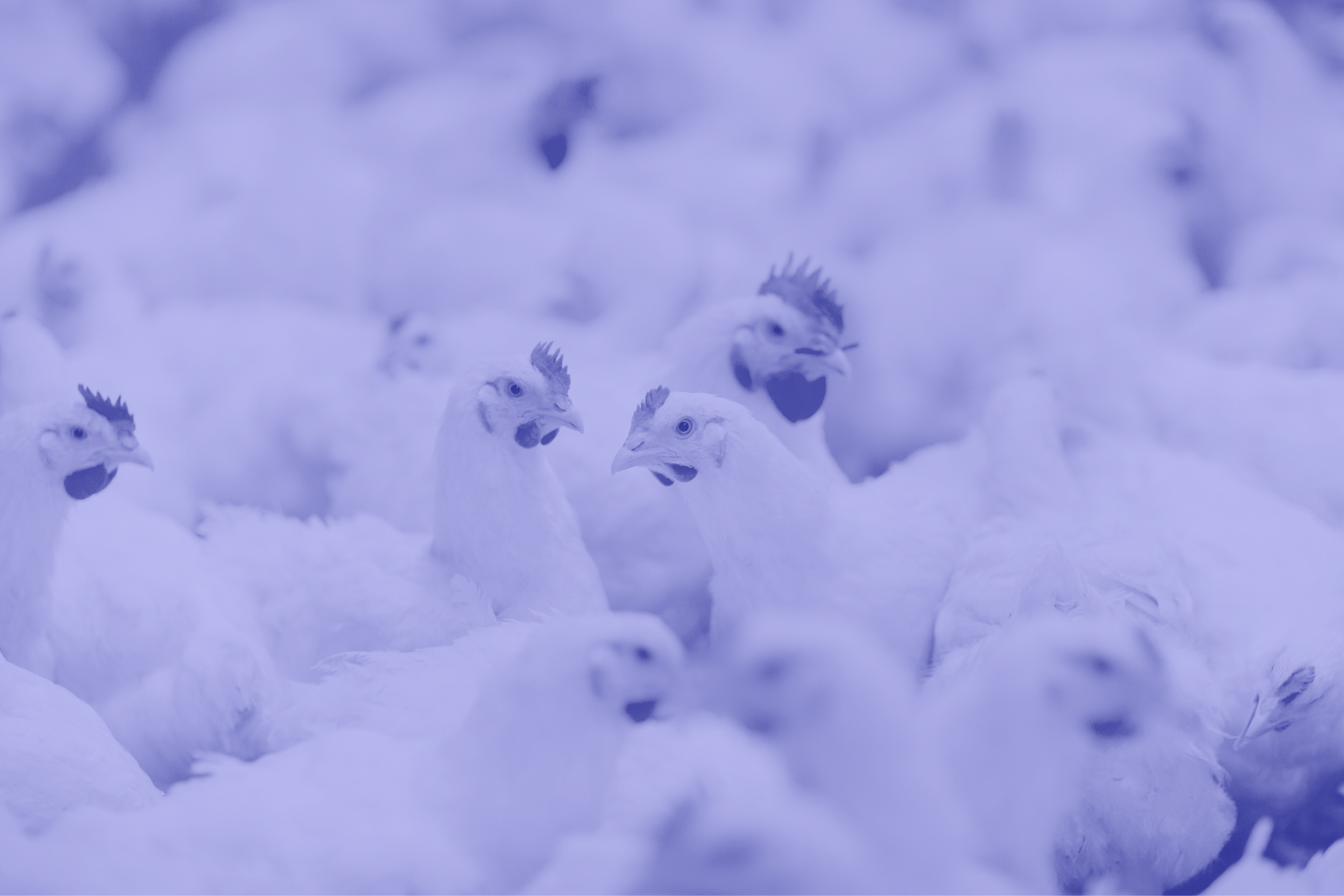
He also discussed humanity’s industrialized use of animals: “Certainly, a sort of industrial use of creatures, so that geese are fed in such a way as to produce as large a liver as possible, or hens live so packed together that they become just caricatures of birds, this degrading of living creatures to a commodity seems to me in fact to contradict the relationship of mutuality that comes across in the Bible.”
A Call to Protect Animals: Pope Francis’s Laudato Si’
Pope Francis continued and developed this strand of tradition with his landmark encyclical, Laudato Si': On Care for Our Common Home. He appealed to two central themes:
First, the call to care for creation (Christians are called to be "protectors of God’s handiwork”; Laudato Si’, §217);
Second, the view of creation as a sacrament (all creatures “are now imbued with [Christ’s] radiant presence”; Laudato Si’, §100).
He urged all people to see “that other living beings have a value of their own in God’s eyes” (Laudato Si’, §69) and to follow the Bible in rejecting a tyrannical anthropocentrism. In reminding us that Jesus says of the birds of the air that “not one of them is forgotten before God” (Lk 12:6), he asks: “How then can we possibly mistreat them or cause them harm?” (Laudato Si’, §221).
Building on these themes, Francis drew the appropriate yet revolutionary conclusion: “The ultimate purpose of other creatures is not to be found in us” (Laudato Si’, §83). With this simple statement, he fundamentally undercut the traditional Catholic understanding that animals exist merely to serve humanity.
In the current Catholic view, when it comes to animals, it’s not all about us.


In our time, the Church does not simply state that other creatures are completely subordinated to the good of human beings, as if they have no worth in themselves and can be treated as we wish.”
– Pope Francis, Laudato Si’, 69.