
What Does a Fish Know? An Interview with Biologist and Best-Selling Author Jonathan Balcombe
What do we really know about the inner lives of fishes? We sat down with Dr. Jonathan Balcombe, whose work has changed the way the world understands these fascinating animals, to find out.
Dr. Balcombe is a biologist, ethologist, and author of seven popular science books exploring the inner lives of animals. His book What a Fish Knows offers a captivating look into the science of fishes’ experiences, including their remarkable capacities for perception, emotion, pleasure, learning, and social connection. Grounded in rigorous research, What a Fish Knows quickly earned widespread recognition, becoming a New York Times Best Seller and receiving critical acclaim. It has now been translated into 17 languages. It has been called “a book full of wonders” by Literary Review and was described by author Sy Montgomery as having a “revelation on every page.”
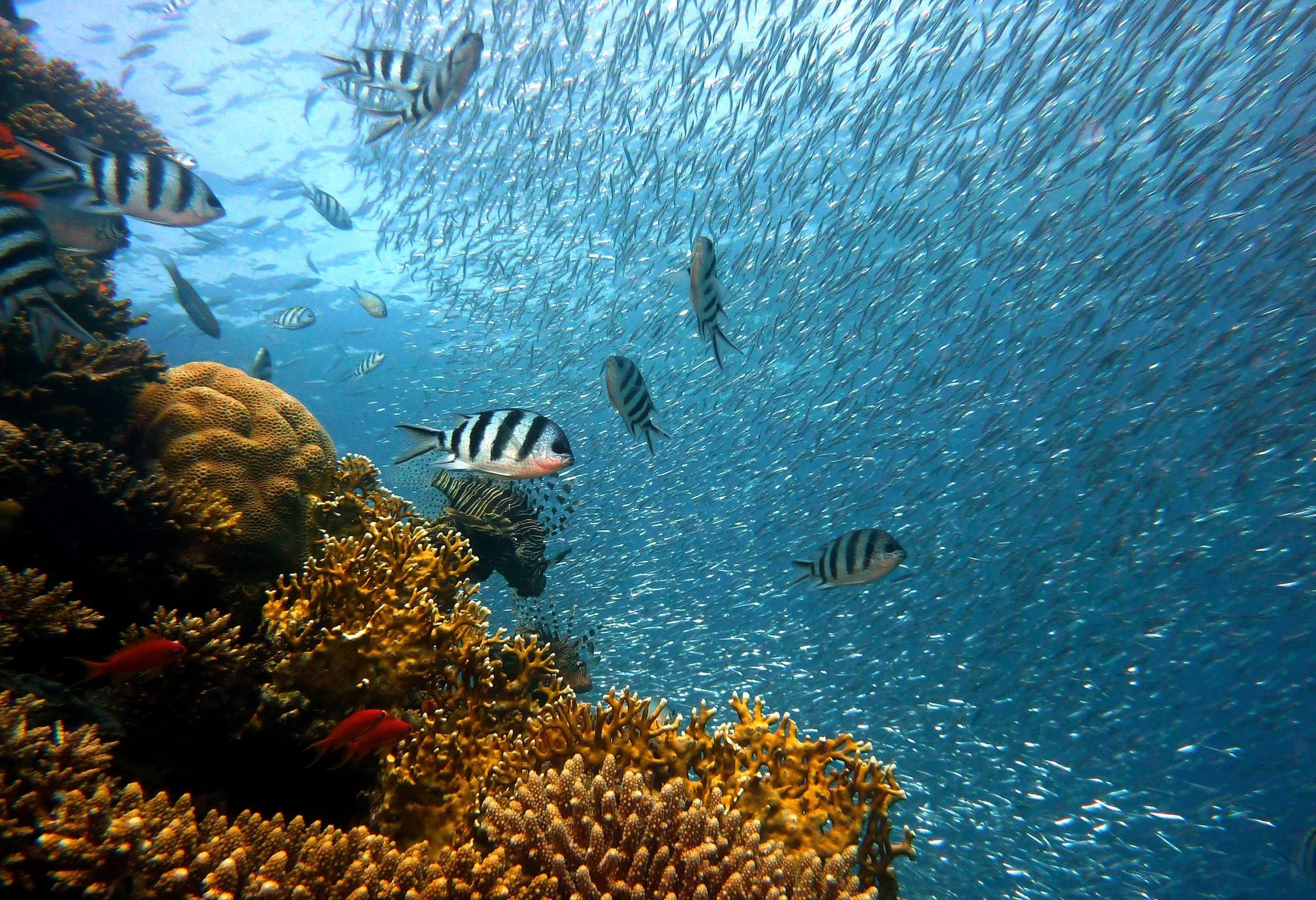
There are trillions of fishes in the world and more than 35,000 known fish species, more than all species of mammals, birds, reptiles, and amphibians combined. Yet most people know very little about their daily lives or inner worlds. Dr. Balcombe has helped to change that, expanding public awareness of fishes and other often-neglected species across the animal kingdom.
Dr. Balcombe’s work spans decades of research in animal sentience. His other books include Beyond Tooth and Claw: Discovering Cooperation and Joy in the Wild (forthcoming from William Morrow, February 2027), Super Fly, Pleasurable Kingdom, Second Nature, The Exultant Ark, and his first children’s book, Jake and Ava: A Boy and a Fish. He has also published over 60 scientific papers and book chapters on animal behavior and animal protection.
We were honored to connect with him to learn more about his journey into animal behavior, surprising insights into fishes’ abilities, and how we can all create a more compassionate world for these vulnerable creatures.
What sparked your interest in animal behavior, and specifically in studying fishes?
JB: I was born with a natural interest in animals. From my earliest memories, I loved seeing the hippos and other animals at the zoo (before I was old enough to be concerned about their confinement). My decision to write a book on fishes came about because I was thinking about new topics for another book. (I prefer the plural word fishes to fish because each one is a unique individual.) And fishes met my three main criteria: 1) they are misunderstood and underestimated by us, 2) there are excellent, revealing scientific discoveries that most people are unaware of, and 3) they are widely maligned by us.
In your book What a Fish Knows, you write that fishes are capable of producing a surprising variety of sounds. You also note that, despite their excellent hearing, for much of history humans assumed fishes were deaf because of their unique ear physiology. What is another fact about fishes or marine animals that you think would surprise most people?
JB: Most people I’ve met are surprised to learn that fishes are not just sentient and able to think, but that they also have emotions. For example, many species of fish release a chemical compound (called “shreckstoff,” which is German for “scary stuff”) through their skin when they feel fear. Other fishes can also detect this compound, becoming alert for danger.
A different study examined a fish’s response to stress. Stressed-out Striated Surgeonfishes from Australia’s Great Barrier Reef actively sought out stress-relief in the form of gentle caresses from a realistic model of a cleaner wrasse. Fishes who couldn’t get such caresses remained stressed for longer than the ones who had access to the wrasse’s touch. On reefs, free-living wrasses perform body-cleaning and parasite-removal services to a variety of other species (including surgeonfishes, of course) and they will caress their clients if the clients are stressed or otherwise unhappy. It’s spa-town down there!
In a forthcoming book (Beyond Tooth and Claw: Discovering Cooperation and Joy in the Wild, forthcoming from William Morrow), I also explore many aspects of fishes’ lives related not to negative but positive behavior and emotions.
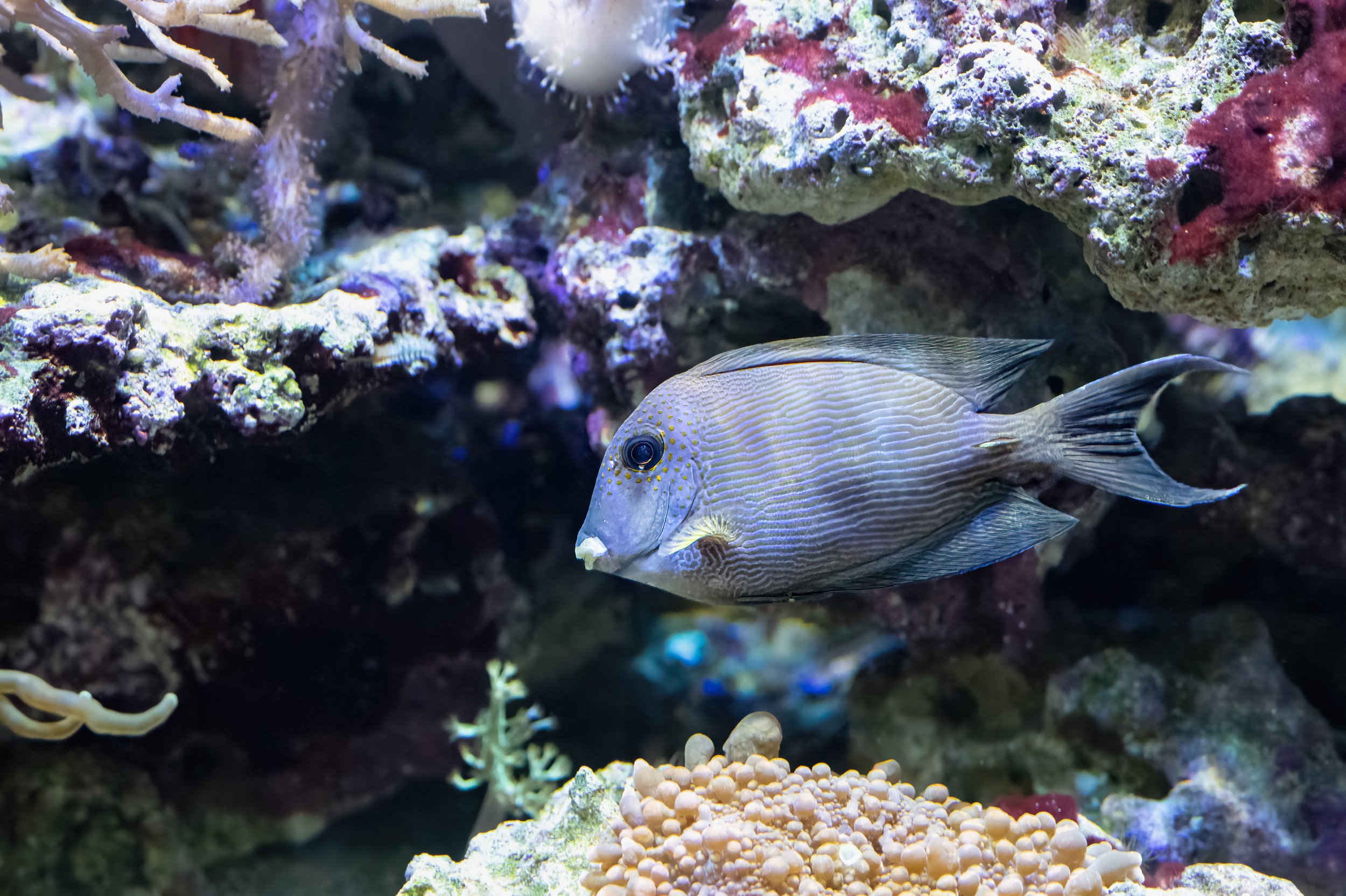
The Striated Surgeonfish, who has been found to seek out stress relief from a realistic model of a cleaner wrasse. Photo credit: istockphoto.com/JiriVlach
How is the study of fish cognition uniquely challenging compared with studying cognition in other animals?
JB: Fishes have been more difficult to study by us because they are unique among vertebrates in spending their entire lives underwater. It’s only with the invention of scuba gear and underwater photography that we have been able to observe them in their natural habitats in greater detail. The fact that fishes don’t blink or have facial expressions (at least not that we recognize) is a further barrier to human empathy. The popularity of recreational fishing constantly reinforces arcane views of fishes as being without thoughts or feelings.
Is there a species of fish whose traits or abilities particularly surprised you?
JB: There are so many! But I will pick one. I was surprised to learn that a goldfish, an animal, demeaned by us (erroneously) as having a 3-second memory, is in fact a social animal who may live for 40 years. At least one type of fish has been shown in careful scientific studies to recognize not only each other, but also human faces. (Incidentally, it can take me less than 3-seconds to forget what I just went upstairs to get!)
What can the average person do to help create a kinder world for fishes and other marine life?
JB: There are many things we can do to help animals, marine or otherwise. One can join a local and/or national advocacy group. One can campaign on their behalf, such as drawing attention to the boredom, loneliness, and suffering that orcas and other marine mammals endure at Marine theme parks, or that Betta fishes (aka Siamese fighting fishes) suffer in many pet shops. Of course, the most immediate and profound step anyone can take to help animals is to refrain from eating them. By doing so, one immediately stops personally funding the enormous commercial industries that plunder the oceans, lakes, and rivers of edible (and inedible) life-forms.
What gives you hope for the future of fishes and other marine life?
JB: Knowledge is a powerful force for change. Especially over the past century we have learned so much about the lives of fishes. And this newfound knowledge is beginning to influence humankind’s treatment of these animals.
Take Action: Dive into the fascinating world of fishes with Dr. Balcombe’s book What a Fish Knows and discover some of the remarkable things science has revealed about their lives. Share what you learn (or this article!) to help others better understand why these animals deserve our respect and protection.
